A Short Guide To High-Intensity Interval Training (HIIT)
High-intensity interval training, or HIIT, is an excellent option for those looking to lose weight quickly and efficiently.
HIIT is an exercise that alternates between short bursts of high-intensity activity and brief rest periods.
This type of workout is more effective at burning fat than traditional cardio exercises and can be done in a shorter time.
It will improve cardio health and aerobic endurance.
What are examples of high-intensity interval training?
The workout consists of alternating between an intense exercise and a low-intensity exercise.
- Running upstairs versus walking
- Burpees versus jumping jacks
- Plank versus push-ups
- Sprinting versus jogging
- Jogging versus walking
Sometimes you can substitute rest for low-intensity exercise.
How long are the durations of intervals?
There is no definitive answer to this question as it depends on your goals, fitness level, and preferences.
However, a typical ratio for HIIT exercise durations to rest durations is 1:2 or 1:3, meaning that for every minute of HIIT exercise, the individual rests for two or three minutes.
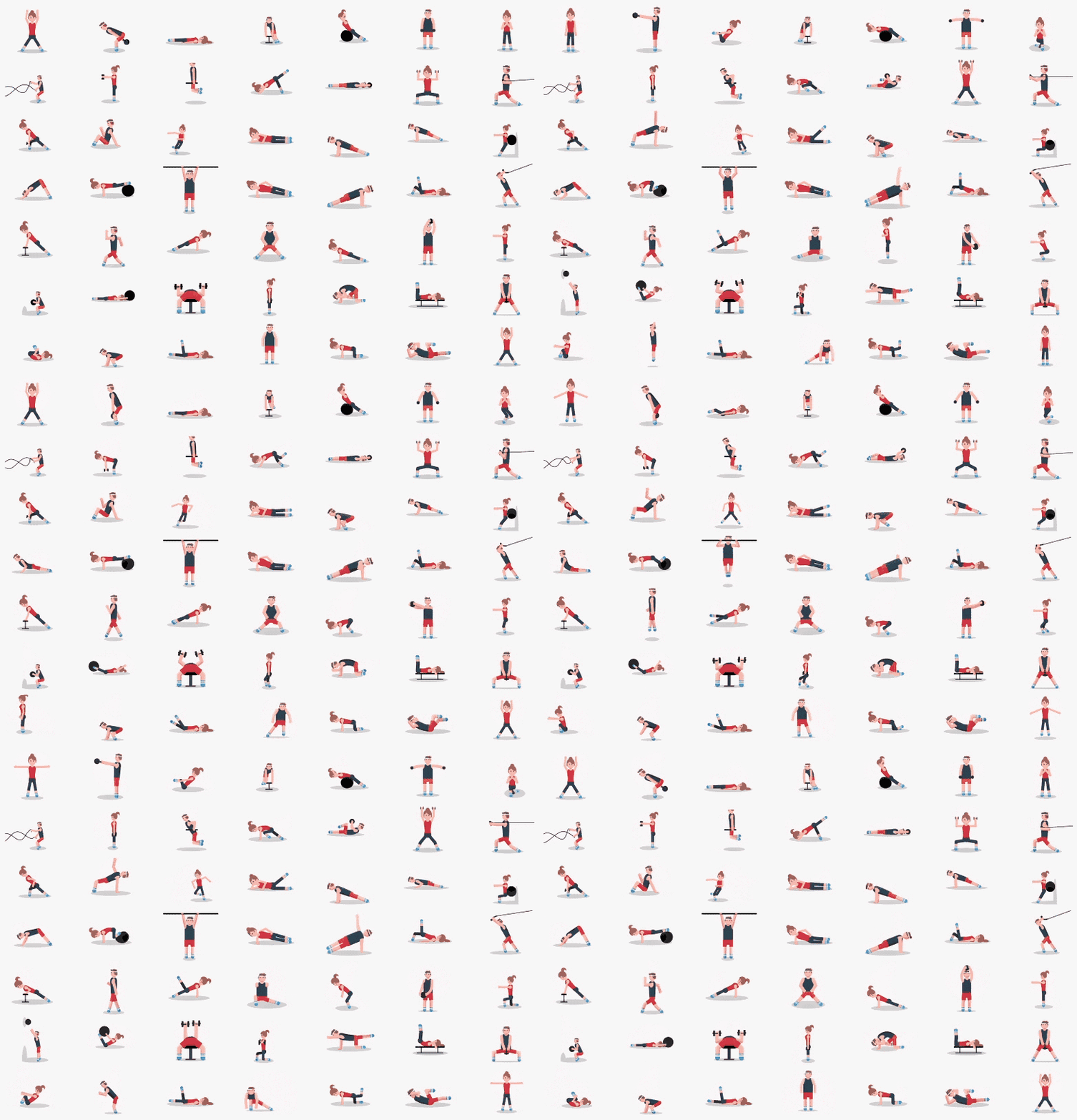
What are common HIIT exercises?
- Treadmill sprints
- Stationary bike sprints
- Rowing machine sprints
- Burpees
- Push-ups
- Squats
- Lunges
- Jumping jacks
- Box jumps
- Kettlebell swings
- Medicine ball slams
- Sledgehammer swings
- Rope jumping
- Mountain climbers
- TRX rows
- TRX squats
- TRX lunges
- Pilates reformer sprints
- Elliptical sprints
- Stair sprints
How can HIIT help you lose weight?
Studies have found that HIIT workouts can help you burn anywhere from five to 20 percent more calories after the workout than steady-state cardio (such as jogging or biking).
Other research has found that HIIT is great for improving cardio-respiratory fitness, but the impact on body fat mass is less pronounced.
The key to successful HIIT training is the intensity level.
HIIT and Macro Counting
While macro counting is a method of losing fat where exercise is unnecessary, interval training is a good option for reducing exercise time.
If you consistently do an HIIT workout (say 3-4 times a week), you should set your activity level to Light on the Macro Calculator.
HIIT workouts for beginners
HIIT workouts can be done using equipment at home or the gym, or with bodyweight exercises.
Choose a high-intensity exercise that’s challenging but still doable. For example, if jogging is your chosen activity, try running upstairs instead of walking.
Do not exceed 80% of your maximum heart rate during your first workout.
6-minute HIIT workout
- Jumping jacks – 1 minute
- Push-ups – 30 seconds, followed by 30 seconds rest.
- Squats – 30 seconds, followed by 30 seconds rest.
- Mountain climbers – 30 seconds, followed by 30 seconds rest.
- High knees – 30 seconds, followed by 30 seconds rest.
- Burpees – 30 seconds, followed by 30 seconds rest.
- Rest – 1 minute
10-minute HIIT workout protocol
- Warm up for one minute at an easy pace.
- Choose your exercise
- Then, increase the intensity for 30 seconds, followed by a 30-second recovery.
- Repeat this cycle eight times for a 10-minute workout.
The benefits of HIIT
- Time ⏰
Instead of 60 minutes of continuous intensity cardio (like brisk walking), a much shorter 15-minute HIIT workout will accomplish the same. - Break a weight loss plateau
If you’ve been doing steady-state cardio and are experiencing a plateau – switch to HIIT. - Cardio-vascular improvement
The research is in agreement with this. - Retaining interest and fighting boredom
Are you walking on a treadmill for an hour? No thanks. But a short, intense cycling workout – is much more enjoyable.
The downsides of HIIT
- Injury risk for beginners
Take it easy if you are starting. - Not for the faint-hearted 🔥
It’s called high-intensity for a reason.
Popular interval training workouts
15-30 Minute HIIT Workouts
There are thousands of HIIT workouts on YouTube.
- Some are geared to men.
- Some are geared to women.
- Some use weights.
- Some use bodyweight.
- Some are adapted for those with injuries or women who are pregnant.
Orange Theory
Orange Theory provides hour-long HIIT sessions with a coach in a class-like setting. It’s great for those who like the motivation a coach can offer and classmates’ support.
Participants can also get a great burn from Orange Theory, burning 500-900 calories per workout depending on your stats and how hard you go at it.
Military Training
You may not be aiming to pass the Army Combat Fitness Test, but military-based workouts such as GrittySoldier offer high-intensity mixes of strength and power, alongside cardio training.
CrossFit
Crossfit is another type of interval training with a lot of variation and a significant strength training component.
Participants work through a Workout of the Day (WOD) consisting of various movements with varying intensity degrees.
WOD Example
- 30 box jumps
- 15 clean and jerks, 65 | 95 lb.
- 30 box jumps
- 15 clean and jerks, 85 | 135 lb.
- 30 box jumps
- 10 clean and jerks, 115 | 185 lb.
- 30 single-leg squats
- 10 clean and jerks, 145 | 225 lb.
- 30 single-leg squats
- 5 clean and jerks, 175 | 275 lb.
- 30 single-leg squats
- 5 clean and jerks, 205 | 315 lb.
Sources
- Sultana, R. N., Sabag, A., Keating, S. E., & Johnson, N. A. (2019). The effect of low-volume high-intensity interval training on body composition and cardiorespiratory fitness: a systematic review and meta-analysis. Sports Medicine, 49(11), 1687-1721.
- O'Keeffe, C. (2015). Systematic review of the efficacy of high intensity interval training versus continuous training for weight loss in overweight and obese individuals.

My advice to most people is that the core of their training should be full-body weights 3 times a week, with the squat and/or deadlift in each of those sessions. HIIT presents an advantage if cardio is your only form of exercise, but it conflicts with proper lower-body weight training.
I’ve been adding in low-intensity cardio (on an exercise bike while I play video games or watch stuff). My body’s still adapting to higher durations, but I’ve already pushed my maintenance from ~3100 to ~3400, which lets me enjoy more food and (possibly) get better nutrient partitioning.
Thanks for sharing, Ryan!
Curious as to your thoughts on how HIIT conflicts with lower-body weight training?
It’s hard to recover from and will conflict with your strength maintenance/progression on lower-body lifts, especially if not programmed intelligently. If you’re squatting and/or deadlifting 3+ times a week (which you generally should be), HIIT is redundant.
I like it for days when I don’t have the time to fit in a longer workout because I feel like I am getting my heart rate up high enough to get some results. I do Tabata intervals where I do plank jumps for 20 seconds alternating with 20 seconds of weighted squats and 20 seconds of jump rope. I repeat until my workout’s over–around 15 minutes or so. I’m always totally winded after that’s over.
What’s a plank jump?
You get into plank position on your hands (not your forearms) and start with your legs together. Keep your arms still but jump with your legs and spread them out to the sides and land with your legs apart. Then jump again and pull them back together. It’s kind of like doing jumping jacks in plank pose. It’s also a serious workout.
It sounds serious.. gotta give it a try sometime 🙂
My experience is that YES, high intensity does help, but NO, it does not burn that many calories if I shorten my workout considerably. In five minutes of high intensity exercise a person might burn about 100-200 calories- that is a lot for 5 minutes, but it is not a lot of calories. Running 10 miles will always burn more calories than running 2 miles, no matter how fast the 2 miles were run. I found out on my bicycle that I controlled my weight better if I increased my distance than by increasing my speed. Both on the shorter and the longer rides, I did include the very steep hill that leaves me a little breathless. The longer ride added some extra hills as well. On the other hand, my experience is that leisurely walking is not that effective for weight loss, even if it is done for a long time. A two hour leisurely walk at 2mph might not even burn as many as 400 calories. A more intense run or bike ride can burn from about 1400-2000 calories in two hours. . So YES, intensity, but duration and distance still count.